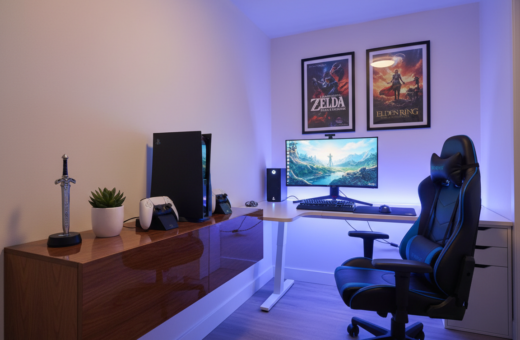
The guide opened by noting that designing a cohesive play area required balance. He or she learned to pair aged furniture pieces with sleek screens to avoid visual clutter. The aim was clarity and purpose in every corner.
Practical choices helped. Selecting vintage cabinets, posters, and carefully placed lighting tied the past to the present. Thoughtful seating and console organization supported long sessions and a comfortable experience.
They found that a measured approach to arcade displays and screen setups preserved character without chaos. A subtle mix of retro and modern elements created a unique setup that honored classic games while supporting current systems. In short, every piece of furniture earned its place.
Establishing the Retro Modern Gaming Room Aesthetic
Blending classic hardware with current screens creates a striking visual that honors both eras. This approach draws from the golden age and focuses on balance, contrast, and careful curation.
Defining the Golden Age
The golden age is anchored by iconic cabinets like Pac-Man, Galaga, and Street Fighter. Placing one or two authentic arcade machines against dark walls creates depth and a museum-like focal point.
Achieving Visual Harmony
Whether designing a compact gaming space or a finished basement, the key is cohesion. Let vintage furniture complement your latest consoles and screens.
Lighting ties scenes together: warm display lights for cabinets, and subtle backlighting for modern setups. Posters, framed cartridges, and tidy shelving keep the space curated rather than cluttered.
- Follow 2025 Pinterest trends: mix collectible pieces with streamlined tech.
- Balance scale: large cabinets get room; smaller consoles pair with compact seating.
- Use consistent color accents to link vintage elements with new setups.
Balancing Vintage Furniture with Modern Technology
Integrating older furniture with new tech calls for smart layout choices and cable management. They should place heavier pieces like cabinets and shelving where they anchor the space.
To preserve the feel of vintage consoles while keeping a clean gaming setup, hide cables behind vintage-inspired wall panels. This keeps the screen areas tidy and the seating clear for long sessions.
Lighting matters. Warm display lights suit arcade cabinets, while neutral backlighting supports a modern screen without clashing. They balance both to protect finishes and improve the game experience.
Smart setup gaming solutions let users switch between a PC and classic cabinets with little fuss. Posters and curated shelving give each console a purpose and prevent the space from feeling cluttered.
- Plan zones so consoles and modern setups do not compete.
- Use hidden power strips and labeled cables for easy swaps.
- Keep seating flexible for varied game sessions.
Creating a Dedicated Console Museum Display
Designing a dedicated console exhibit starts with a clear focal point and careful protection. The display should invite viewing while limiting light and dust that harm old electronics.
Lighting and Preservation Techniques
A 1985 CRT television often serves as the centerpiece to deliver authentic visuals for classic systems. Place it on a low credenza so sightlines match seated viewers.
Use floating shelves for vintage consoles and label each shelf. Add dedicated LED strips set to low heat output to preserve plastics and decals.
- Keep rare cartridges and controllers in glass cases to block dust and curious hands.
- Install museum-quality spotlights to highlight design without heating components.
- Plan comfortable seating near the display for long sessions that let visitors enjoy both play and preservation.
Professional setups include hidden power strips and ventilation to avoid moisture buildup. For more ideas, consult a curated list like top retro gaming room ideas.
Incorporating Industrial Arcade Elements
Exposed brick, polished concrete, and towering cabinets set the stage for an industrial arcade vibe.
Authentic arcade cabinets, like a Street Fighter machine, act as focal points. Place them against a textured wall to anchor a section of the space.
Seating such as chrome bar stools complements vintage furniture and keeps sightlines clear for screens and consoles.
Concrete floors can amplify sound during sessions. Designers often use rugs or risers to tame echo while preserving the raw look.
- Position cabinets to allow movement during intense multiplayer matches.
- Mix age gaming aesthetics with efficient setup gaming plans for flow.
- Use posters and industrial shelving to link consoles, cabinets, and displays.
For practical layout examples, consult a hands-on guide like gaming room ideas to adapt the industrial arcade style to your own space.
Designing a Neon-Drenched Gaming Cave
A neon-drenched cave turns a hobby alcove into a sensory centerpiece that invites late-night play. Thoughtful lighting makes the space feel intentional rather than noisy.
Strategic LED Placement
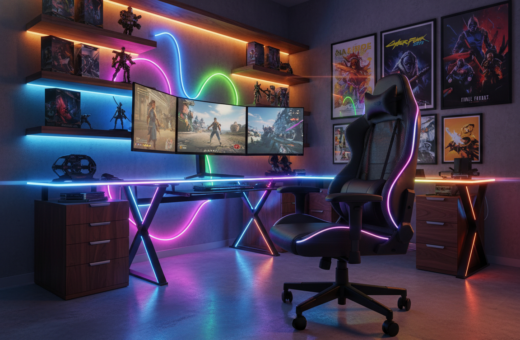
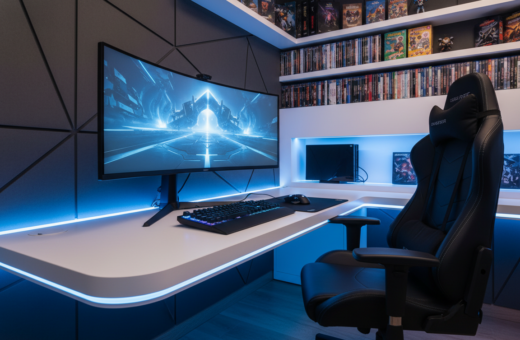
LED strips behind monitors create soft halos that reduce eye strain and add depth to shelves and cabinets. Place strips under shelving, along the back of a credenza, and around display cases to highlight consoles and posters.
Use low-heat LEDs near delicate vintage furniture to avoid damage. High-quality led strips with adhesive backing simplify installation and last longer.
Syncing Lighting with Gameplay
Programmable smart lights shift color and intensity during gaming sessions to match in-game moods. Teams can set profiles for racing, platformers, and co-op matches to boost immersion.
Neon signs featuring the Konami Code symbol add authentic 1980s arcade flair and act as a visual anchor above seating or a screen. The glow can reflect off lacquered finishes to unify the setup and furniture.
- Map LED zones for screen, cabinets, and seating to avoid glare.
- Use presets that change with the game to create consistent atmosphere.
- Invest in quality led strips to preserve color and reduce flicker.
Utilizing Mid-Century Modern Retro-Futurism
Sixties space-age furniture can anchor a setup and guide traffic during active sessions. They should place circular floating desks to create central work zones that encourage social play.
Atomic-age chairs and curved cabinets add sculptural interest while keeping sightlines open. Open-flow seating helps people move between consoles and the screen without blocking views.
For displays, use floating shelves that echo the clean lines of the vintage pieces. This makes it easy to show consoles and posters while keeping cables hidden behind panels.
Designers note that unusual angles and space-age finishes make the space feel cinematic. When they would like a unique gaming space, these touches turn functional setups into memorable interiors.
- Select a circular desk for shared sessions.
- Match floating shelves to furniture finishes for visual cohesion.
- Keep pathways clear so games and social interaction flow naturally.
Implementing Pixelated Wall Art and Decor
Pixelated murals recall cartridge-era graphics and can anchor a focal wall without overpowering furniture. They celebrate the golden age while guiding sightlines toward screens and seating.
Use a large mural of classic arcade machines or tile-style sprites to create a striking focal point. Pair decals with framed posters and low shelving so consoles and cabinets stay visible but tidy.
Practical tips help keep the setup usable during long gaming sessions. Choose blocky, geometric furniture to echo pixel shapes and protect vintage pieces with low-heat lighting.
- Place murals opposite the main screen to balance light and reduce glare.
- Use removable decals for flexible room ideas and easy updates.
- Mix labeled shelves for consoles, controllers, and collectible posters.
When they combine pixel art with classic pieces, the space becomes both nostalgic and functional. The result is a cohesive gaming experience that honors arcade history without sacrificing modern setups.
Curating Authentic Gaming Memorabilia
Collectors often treat memorabilia like a living archive that tells the story of consoles and characters.
To preserve that story, they start with an inventory and clear zones. This makes a tidy gaming room setup that invites browsing and play.
Organizing Collections by Franchise
Group by franchise so related posters, action figures, and consoles live together. This creates an instant timeline of the golden age gaming era and helps guests follow the narrative.
Use glass display cases for rare action figures and vintage consoles. Museum-quality LED strips highlight each shelf without adding heat.
Place comfortable seating nearby so collectors can rest between sessions and appreciate the displays. Label shelves and cabinets for quick access and safe handling.
“Curated displays turn collections into stories visitors can read at a glance.”
Practical tips:
- Mount franchise posters above matching shelves to unify wall space and setups.
- Store duplicates and loose parts in labeled boxes behind cabinets.
- Rotate featured pieces seasonally to keep the exhibit fresh and educational.
Result: A cohesive space that protects valuables, highlights action figures, and supports a clean, usable gaming setup.
Conclusion
A well-composed space pairs heirloom furnishings with current displays to tell a clear visual story. This approach preserves the retro aesthetic while giving each vintage piece room to shine.
By using smart placement, thoughtful lighting, and clean cable runs, they create a cohesive retro gaming room that stays usable over time. Follow these gaming room ideas and room ideas to balance form and function.
Investing in quality vintage pieces and planning the setup carefully delivers the ultimate gaming experience. The result is a purposeful setup and a timeless tribute to classic play.