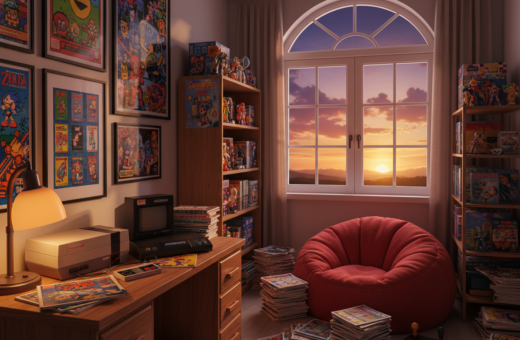
He grew up in the 1990s and felt a strong pull to recapture that decade’s simple joys. He converted a spare home office into a dedicated space that honored those earlier days.
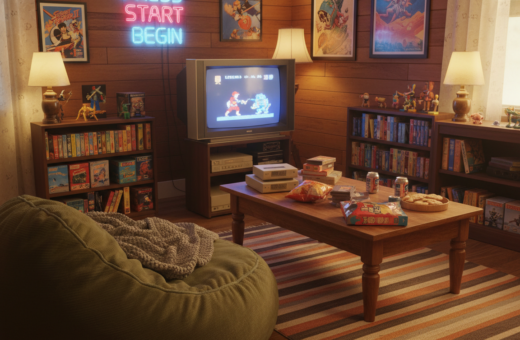
The project focused on a retro gaming corner that blended vintage consoles, warm lighting, and thrift-store finds. Every choice aimed to evoke the look and feel of his childhood living room.
He moved old systems, stacked cartridges, and arranged neon accents so each piece added to the mood. This careful curation helped him step away from complex online play and reconnect with the roots of his hobby.
The result was a cozy, nostalgic room where play felt intentional and relaxed. For layout tips and styling ideas, he consulted resources like inspiring gaming room ideas to refine lighting and display choices.
Sourcing Classic Consoles and Games
A massive gift of classic titles jump-started the collection and set the restoration work in motion. A friend handed over a stack of beloved discs and cartridges, including Resident Evil 4 and Tony Hawk Underground 2. Those titles became the core of a carefully curated shelf.
Acquiring Childhood Collections
He tracked down additional finds at local sales and online listings. Strategy guides and old Game Informer issues arrived with boxes of games and added context to the era.
Restoring Original Hardware
Restoration required patience. The original Xbox and PlayStation One needed cleaning, new caps, and careful testing to run properly.
- The donated stack included landmark titles that defined play for him.
- Cleaning dust, replacing belts, and reseating connectors brought systems back to life.
- Once serviced, these consoles delivered authentic video and sound that modern emulation sometimes misses.
Building the Ultimate Retro Gaming Corner
He set up the hardware so every console was within easy reach for daily play sessions. Placing systems in a central location made swapping controllers and cartridges quick and natural.
To manage multiple video feeds, he added an RCA switcher that handled composite connections from several systems. This cut down on cable swapping and made testing titles faster.
Accessories mattered. He used inexpensive storage sleeves, spare controllers, and a multi-port power strip to lower costs while keeping play practical and pleasant.
- Careful cable routing kept the setup tidy and reduced signal noise.
- Labeling each cord and port saved time when changing systems.
- Open shelving kept consoles cool and visible for quick access.
The result was a focused room that balanced form and function. He created a clean, organized space where games ran smoothly and the consoles stayed ready for the next session.
Technical Challenges of CRT Displays
Finding a faithful CRT took longer than restoring any single console in the collection.
Finding the Right Monitor
In 2024 he scoured Facebook Marketplace looking for a working CRT. Many free or cheap units had major faults or failed to power on.
The first snag was an 80-pound Insignia that looked promising but warped under extended play. That experience made him wary of bulky, untested sets.
He finally paid $40 for a SHARP CRT monitor that matched the model he used as a kid. The SHARP delivered the authentic scanlines and color the HDTVs could not reproduce.
- The Facebook Marketplace search exposed many defective finds.
- The Insignia’s warping proved some sets can’t handle long sessions.
- Testing the SHARP confirmed stable picture and long-term reliability.
Plugging old hardware into modern HDTVs would have ruined the image quality, so securing a proper CRT was essential to complete the setup.
Conclusion
A single warm CRT glow made the whole room feel like a memory returned. The moment confirmed that the project had become more than a build; it was a living tribute.
Revisiting a favorite game inspired the author to launch the Waypoint Wishlist project to document his ongoing passion. He writes short notes and photos to track repairs, finds, and playing impressions.
He believes that original cartridges and discs still hold a power modern remasters can’t quite match. For thoughts on revisiting classic titles and why they matter, he links to a piece about revisiting classic titles: revisiting classic titles, which echoes many of his views on retro games.
He remains committed to preserving this collection and sharing insights with other fans. The experience reminded him where his love for the medium began and renewed his intent to keep these games ready for the next play session.